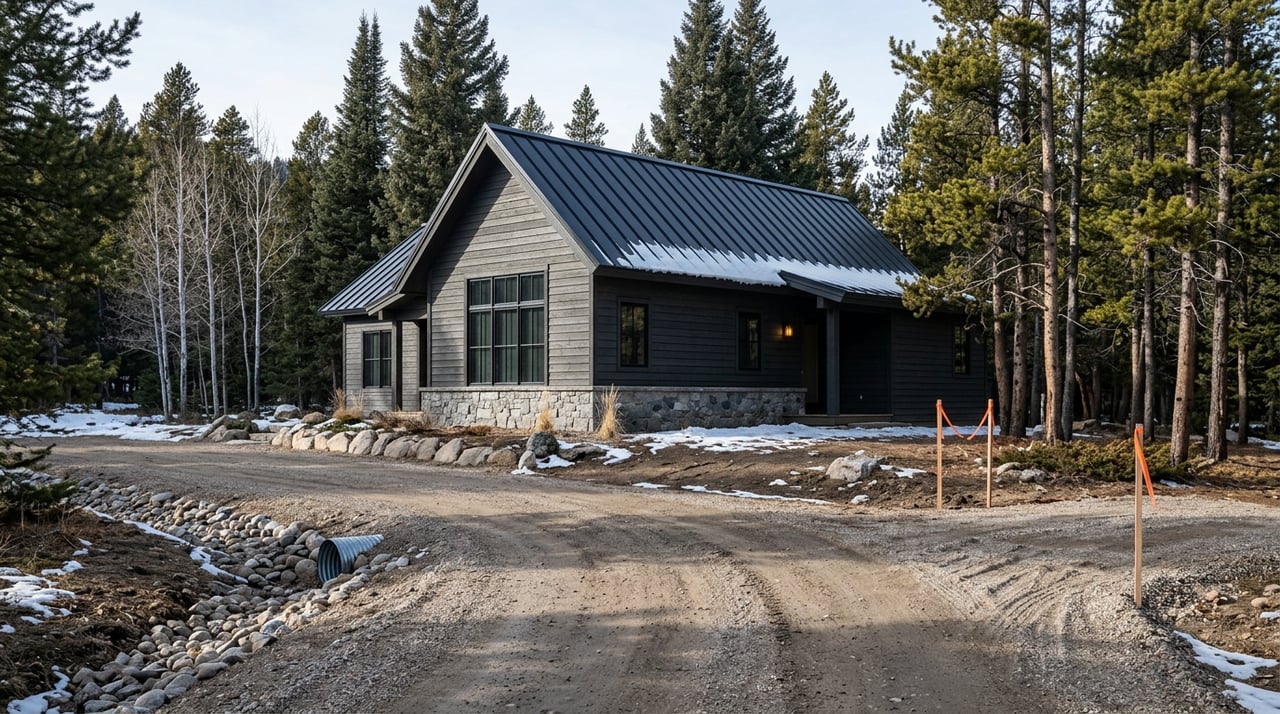
How To Choose The Right Land Parcel In Park County
March 12, 2026
March 12, 2026
You can fall in love with a mountain view, then discover the driveway alone will cost more than the land. In Park County, the right parcel is the one that fits your vision and avoids surprise costs. Whether you plan a cabin, custom home, or long‑term retreat, a little due diligence now can save months of delay later. This guide walks you through the critical checks, where to verify them, and how to compare lots with confidence. Let’s dive in.
If you cannot reach the site year‑round or build a safe driveway, everything else stalls. Park County expects you to identify your driveway location and obtain an access permit before you build the drive. Review the county’s expectations in the Park County Development Guidelines. Work inside the public right‑of‑way, including culverts and utility crossings, typically requires a separate utility or improvement permit under the county’s Right‑of‑Way and Utility Accommodation Code.
Not all roads are county maintained. Many rural or private roads are unplowed during winter, and Park County notes that snow removal on lower‑priority roads is a courtesy, not an entitlement. Confirm whether your access road is county maintained or private, and ask about typical winter conditions through the Development Guidelines. If access is seasonal, plan for added site work, plowing, or a different parcel.
Recorded easements can control where you place a driveway, utilities, or structures. Covenants or HOA guidelines may limit building envelopes, exterior finishes, fencing, or outbuildings. Park County’s Land Use Regulations also recognize mining and resource uses in some zones. Ask your title company and the county for recorded plats, easements, and any mineral reservations so you know what rights transfer with the land.
Topography, soils, and water features can add cost or reduce usable building area. Take time to evaluate the ground, then line that up with your ideal home location and access.
Steep slopes push up costs for grading, retaining walls, and engineered foundations. They also make driveways longer and more complex. South‑facing sites can melt snow faster and support passive solar design, but wind exposure, tree cover, and safe access matter just as much. Expect the county to require a plot plan that shows your proposed driveway, well, and septic locations, which you can coordinate with help from the Development Services portal.
Most rural parcels will need an on‑site wastewater treatment system. Park County enforces state OWTS standards and adds local high‑altitude rules that can affect design. At higher elevations many lots need engineered or mound systems, and winter conditions can delay installation. Start early by reviewing the county’s OWTS and septic regulations and asking Environmental Health for any existing permits or as‑builts. For a first look at site conditions, consult the NRCS soil data and interpretations, which help flag shallow bedrock, drainage, and erosion concerns. The NRCS details its updated soils resources here.
Streams, wetlands, and flood hazards can limit where you can build or place a driveway. Park County’s permit packet links to the National Wetlands Inventory and FEMA flood maps and may require a wetland delineation if your site includes sensitive areas. Use the county’s Development Services portal as your starting point to confirm what studies or setbacks apply to the parcel you are considering.
You need a clear plan for water, wastewater, power, heat, and internet before you buy. Availability is location specific in Park County, so verify at the parcel level.
Every new well in Colorado requires a state permit. Before you place an offer, search the state’s database for an existing permit and driller logs, or review the permitting pathway for a new well through the Colorado Division of Water Resources. A permit authorizes use but does not guarantee water yield, so budget for drilling risk and, if needed, storage.
Parts of Park County are served by electric cooperatives and other utilities. CORE Electric Cooperative is a major provider in the region. Contact the serving utility early for line‑extension feasibility and cost estimates since you may be responsible for a portion of the extension. Start with CORE Electric Cooperative to confirm service lines and policies. Many parcels also use propane for heating, so factor in tank installation and delivery logistics.
Broadband varies by address in Park County. Fixed‑wireless, local phone companies, and satellite services are commonly used. For a quick sense of options around Fairplay and nearby areas, you can explore address‑level comparisons through this broadband reference, then verify availability at the exact parcel.
Park County follows adopted building codes and will review your plans for structural loads and compliance. Timing and sequencing matter, so understand what comes first.
Park County’s materials state the county uses the 2018 International Codes and requires you to determine ground snow and wind loads with the ASCE Hazard Tool as part of your submittal. The county updated its snow and wind load approach effective January 1, 2024. Review the county’s process and expectations in the Park County Development Guide so your design team can size structural elements correctly.
Much of Park County is in the wildland‑urban interface where wildfire risk is a planning factor. Some fire districts require mitigation reviews or fee receipts as part of building permit approval. To understand local risk and mitigation priorities, read the Park County Community Wildfire Protection Plan, available through the Colorado State Forest Service. Confirm your parcel’s covering district and any documentation it will require during the permit process.
In most cases, Park County will want both septic approval and proof of a legal water source before it issues a building permit. That means septic feasibility and well permitting are often the gating items that control your build timeline. Get familiar with the county’s OWTS guidance and forms and keep those submittals moving early.
Mountain building is a logistics puzzle, and a few site conditions consistently drive budget and schedule.
Use this quick rubric to score lots on a 0 to 5 scale, then compare total scores. It is not a substitute for professional advice, but it helps you focus your search.
Work through these items before you spend on design, and prioritize the first six before you make an offer. You can request many county records and forms from the Park County Development Services portal and search well permits through the Colorado Division of Water Resources.
Preliminary title report and recorded deed that show access rights, easements, and any mineral reservations.
Recorded plat or a stamped survey that confirms parcel boundaries and legal access.
Well documentation. For existing wells, pull the permit file and completion logs. For new wells, confirm permit pathway through the state’s well permitting guidance.
Septic documentation. Request any septic permits or as‑builts from the county and review local requirements in the OWTS regulations.
Road status and access. Verify whether the road is county maintained, any driveway permit history, and culvert requirements in the Development Guidelines.
Utility availability letters. Contact the serving electric provider early, such as CORE Electric Cooperative, and note phone and internet options for the parcel.
Fire district identification and any mitigation or fee requirements. Use the Park County CWPP to understand regional risk while you confirm parcel‑specific steps with the local district.
NRCS soil interpretation to flag shallow bedrock, drainage, or erosion issues. Review the updated soils resources here.
Wetlands and flood checks. Use the county’s Development Services portal for links to FEMA mapping and wetland guidance.
Building code and submittal requirements. Confirm plan checklists, snow and wind load documentation, and submittal timelines in the county’s Development Guide.
The right parcel balances access, utilities, buildability, and your budget. In Park County that usually means verifying legal, year‑round access, confirming a viable well and septic pathway, and aligning your design with current codes and wildfire mitigation. When these pieces are in place, you can move forward with confidence and an accurate build plan.
If you want a second set of eyes on a lot, or you need help sourcing on‑ or off‑market parcels that meet these criteria, reach out to Rianna Royer. Rianna specializes in mountain land and custom build sites across Summit County and Park County and can help you vet access, utilities, and timelines before you commit.
Stay up to date on the latest real estate trends.
Let me be your beacon from our first interaction to close and beyond! Whether you are buying or selling, I look forward to serving your specific real estate needs and bringing unparalleled value and expertise.