Understanding Keystone Resort HOAs And Owner Amenities
July 9, 2026
July 9, 2026
If you are shopping for a condo or second home in Keystone, it is easy to focus on the fun part first: ski access, village energy, mountain views, and the promise of a hot tub after a day outside. But in Keystone, the real ownership experience often comes down to the fine print behind the building. HOA rules, reserve planning, amenity access, and local short-term rental requirements can shape your costs and your flexibility just as much as the location itself. This guide will help you understand what Keystone HOAs usually cover, how owner amenities can differ from one property to the next, and what to review before you buy. Let’s dive in.
Keystone is not one single, uniform ownership setup. The resort spans several areas, including River Run Village, Mountain House, Lakeside Village, East Keystone, North Keystone, and West Keystone, with lodging types that range from hotel-style properties to condos, townhomes, and single-family homes.
That matters because two homes in Keystone can offer very different ownership experiences. A building in River Run may include a very different set of services, use rules, and amenity access than a property in North Keystone or Lakeside Village, even if both are marketed under the Keystone name.
In a resort market, buyers often assume a broad location tells the whole story. In reality, amenity packages and operating rules can vary building by building, not just area by area.
For you as a buyer, that means the key question is not simply whether a property is in Keystone. It is whether that specific HOA, building, or management structure matches how you want to use the home, whether for personal ski trips, seasonal stays, or short-term rental use.
In Keystone, convenience is not only about being steps from the lift. The resort’s parking setup includes free parking at River Run Parking Lot, Mountain House East, and Lakeside Village, paid parking at Mountain House West, and free shuttle connections between lots and base areas. The North Shuttle Lot also serves as overflow parking with shuttle access.
That means shuttle service can be a meaningful amenity, especially if you are buying a second home or rental property. A unit that is not ski-in/ski-out may still feel highly functional if owners and guests can move easily between base areas and parking zones.
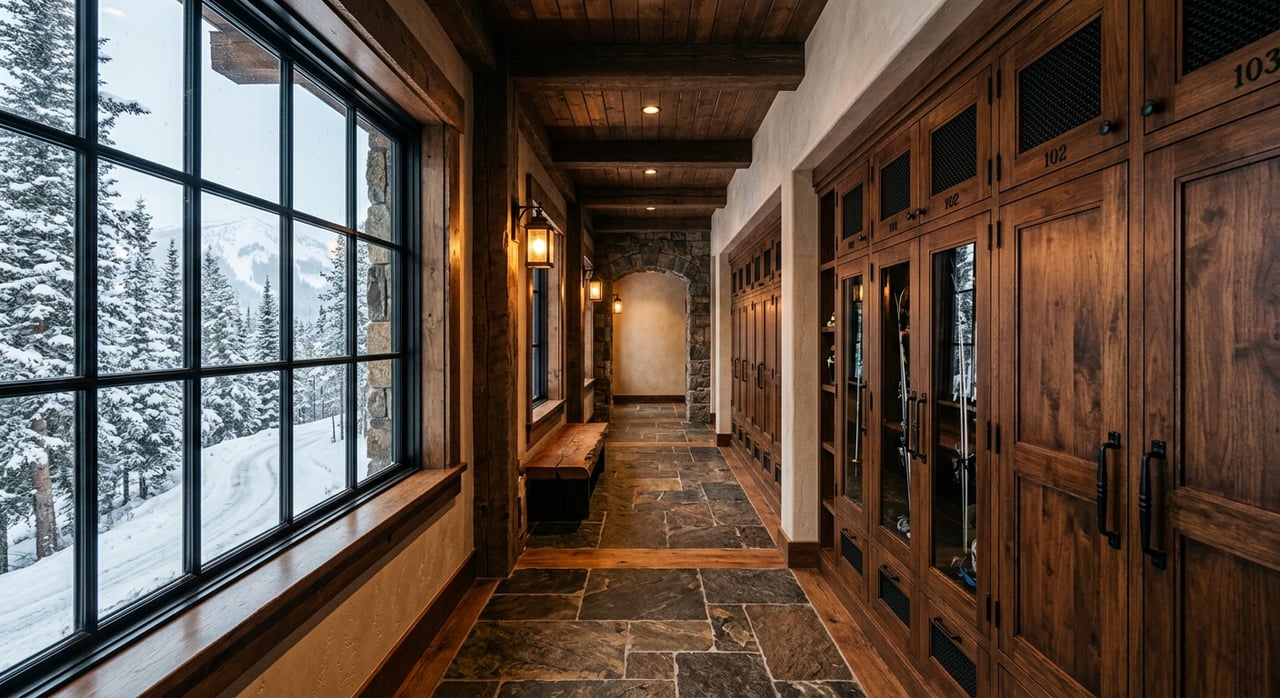
Ski storage can be a major quality-of-life feature in Keystone. The resort offers seasonal lockers in River Run Village near Buffalo Lodge, which shows how valuable on-mountain storage can be in a ski destination.
When you compare properties, ask exactly how storage works. Some buildings may include owner storage, while others may offer limited access, assigned spaces, seasonal options, or no dedicated ski locker at all.
These are some of the most talked-about amenities in Keystone, but they are not always included in the same way. Some lodging products offer access through a resort fee that may include Wi-Fi, spa amenities, pool and hot tubs, a 24/7 fitness center, equipment valet, and courtesy shuttle service.
Other properties advertise more limited amenity sets, such as pool and hot tub access, full kitchens, or in-unit laundry. The takeaway is simple: do not assume every Keystone condo comes with the same lifestyle package.
In resort ownership, service can be just as important as recreation. Keystone Resort Property Management describes support that may include 24/7 guest services, periodic inspections, housekeeping, maintenance support, and an owner portal for billing and booking visibility.
If you plan to use your property as a second home or vacation rental, these operational services can add real value. They may affect how hands-on you need to be and how smoothly the property functions when you are out of town.
In Colorado, regular HOA assessments usually fund operating maintenance. In a Keystone setting, that may include the ongoing cost of maintaining common areas, shared systems, insurance on common elements, and services tied to the association.
Colorado DORA also notes that HOA dues can generally rise as needed to meet budget requirements unless the declaration places a cap on increases. That is why a low monthly fee is not automatically a better deal if it does not align with the building’s actual maintenance needs.
Special assessments are generally used for repairs, replacements, or new construction. In a mountain market, that can be especially important because buildings may face major long-term costs tied to roofs, mechanical systems, parking structures, and amenity areas.
If a community has thin reserves, a future repair may be pushed onto owners through a special assessment. That is one reason experienced resort buyers look past the current dues number and ask how the HOA plans for bigger capital needs.
Colorado law frames common interest communities around shared expenses such as taxes, insurance premiums, maintenance, and improvements to common real estate. Colorado HOAs must maintain property insurance on common elements and commercial general liability insurance, and some larger or professionally managed communities may also need fidelity insurance.
For you, this means HOA dues often support more than landscaping or snow removal. They may also help fund the risk-management side of ownership, which is especially relevant in multi-unit resort properties.
Colorado does not require reserve studies, but it does require a reserve-study policy that explains when a study will occur, whether there is a funding plan, and whether the study includes physical and financial analysis. That policy can tell you a lot about how seriously an HOA plans for future expenses.
In Keystone, reserves matter because resort buildings often have costly shared elements. Pools, hot tubs, elevators, decks, parking areas, and mechanical systems all require long-term planning, and mountain weather can add wear over time.
A building with higher dues may actually be better positioned if reserves are healthy and capital planning is clear. On the other hand, a low-fee building can carry more future cost risk if major repairs are likely to land on owners later.
Colorado DORA says there is no central repository for HOA governing documents. In practice, buyers typically receive the current governing and financial documents through the transaction process.
The annual disclosure should include key items such as association and manager contact information, declaration details, the current operating budget, current assessments, annual financial statements and reserve amounts, the most recent audit or review, prior-year board and membership meeting minutes, and responsible governance policies.
When you review a Keystone HOA, focus on practical ownership questions like these:
These questions help you understand how the property will function in real life, not just how it looks in listing photos.
If you are considering rental income, local compliance matters. Summit County’s STR affidavit requires a 24-hour responsible agent who responds to complaints within an hour, a valid sales-tax license account for rentals under 30 days in unincorporated Summit County, compliance with dark-sky lighting standards, wildfire and fire-pit rules, a county-approved trash plan, a parking plan, posted occupancy and contact information, and inclusion of the STR license number in advertisements.
The county’s Good Neighbor Guidelines also emphasize quiet after 9 p.m., wildlife-safe trash handling, and the prohibition on portable outdoor fireplaces. These are operating realities you should understand before you count on a property for short-term rental use.
Summit County’s STR overlay map identifies Keystone-specific areas such as River Run Keystone, Lakeside Keystone, Mountain House Keystone, North Keystone, Old Keystone, Wintergreen Keystone, and Keystone Ranch. The county also distinguishes Resort Licenses from Type I and Type II licenses, and Type I and Type II licenses are capped at 35 bookings per year.
The main takeaway is that STR eligibility should be confirmed unit by unit. You should not assume a property qualifies for your intended rental strategy simply because it is located in Keystone.
Two Keystone units can appear nearly identical online while offering very different ownership economics. One may have broader amenity access, stronger reserves, and more flexible use rules, while the other may carry hidden friction through limited parking, separate resort fees, or tighter rental restrictions.
As you compare options, look at the full picture:
This kind of side-by-side review can save you from expensive surprises later.
In Keystone, HOA analysis is part of buying smart. A pool, hot tub, shuttle, or ski locker may look like a simple perk, but each amenity comes with operating costs, rules, and long-term maintenance needs that affect your ownership experience.
If you are buying a family retreat, you want a property that fits how you actually spend time in the mountains. If you are buying with rental goals in mind, you also need the documents, fees, and local rules to support that plan from day one.
Working through those details early can help you choose a Keystone property with more confidence. If you want a local, practical read on Keystone condos, HOAs, and resort ownership tradeoffs, Rianna Royer can help you evaluate the options with both lifestyle and investment goals in mind.
Stay up to date on the latest real estate trends.

Let me be your beacon from our first interaction to close and beyond! Whether you are buying or selling, I look forward to serving your specific real estate needs and bringing unparalleled value and expertise.